
ICP vs. Persona: Why Most Teams Get Both Wrong — And How It Kills Revenue
Your ICP and your buyer personas are not the same thing. Confusing them is one of the most expensive mistakes in B2B marketing.
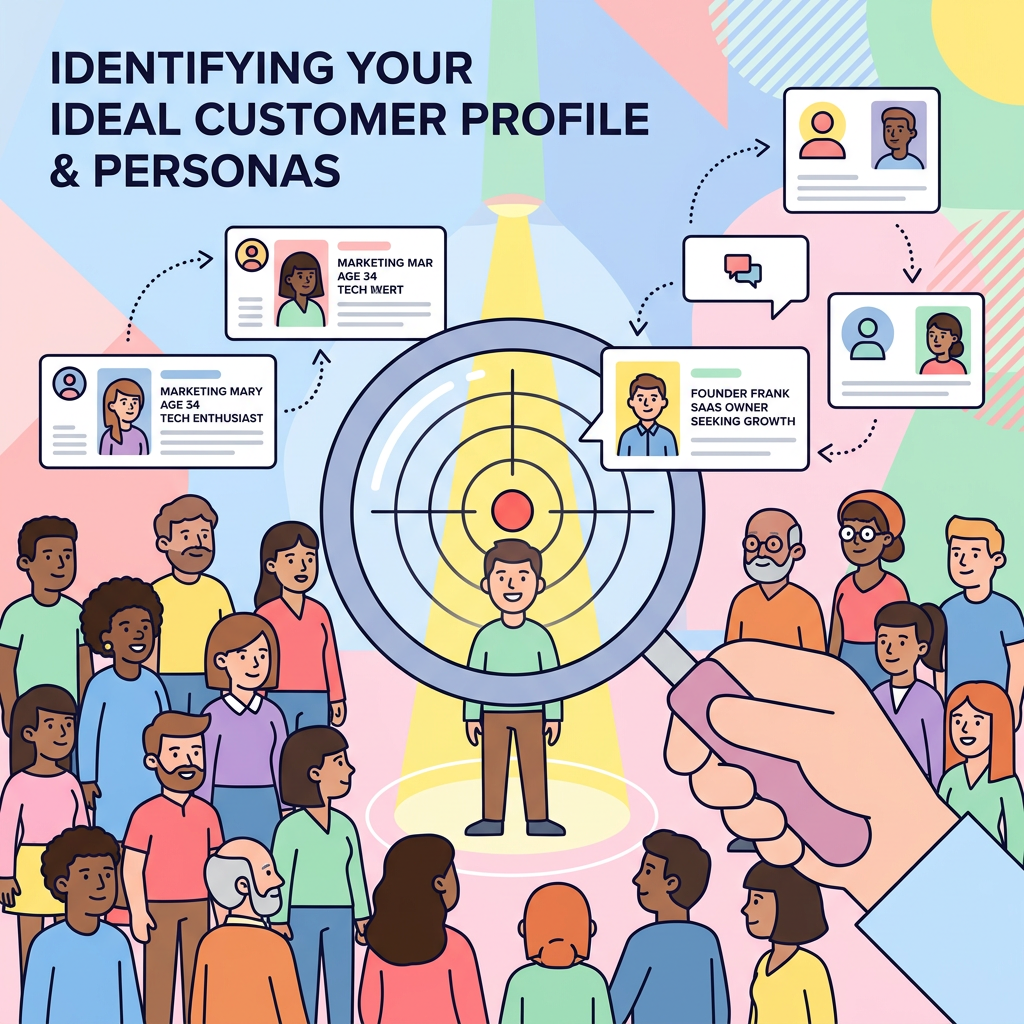
Walk into almost any B2B marketing team and ask to see their ICP. What you'll likely get is a buyer persona — a detailed profile of a fictional "ideal user" with a name, a job title, a set of frustrations, and maybe a stock photo. It's useful. But it's not an ICP.
Confusing these two concepts leads to misaligned targeting, wasted pipeline, and messaging that speaks to the right individual at the wrong company. Here's what each one actually is — and how to use them correctly.
What Is an ICP?
Your Ideal Customer Profile is a description of the type of company — not person — that is most likely to buy from you, stay with you, and grow with you. ICP lives at the organizational level.
A strong ICP typically captures:
- Firmographics: Company size, industry, geography, revenue range
- Technographics: The tools and infrastructure they use that make them a good fit
- Behavioral signals: What they're actively doing that indicates buying intent
- Situational triggers: Events (funding, hiring, product launches) that increase likelihood of buying now
- Revenue potential: What an account of this type is worth over its lifetime
ICP answers the question: What does a great company-fit look like?
What Is a Buyer Persona?
A buyer persona is a profile of the individual within your ICP company who is most likely to champion, influence, or block your sale. It lives at the person level.
A strong persona captures:
- Role and responsibilities: What they own, what they're measured on
- Goals: What success looks like for them in their role
- Pain points: The friction they experience that your product addresses
- Objections: What they'll push back on and why
- Buying behavior: How they research, evaluate, and make decisions
Personas answer the question: Who within that company do we need to reach — and how?
The Relationship Between ICP and Persona
Think of it as concentric circles. ICP is the outer ring — it defines the universe of companies worth targeting. Persona is the inner ring — it defines the people within those companies who matter to your GTM motion.
Getting ICP wrong means your pipeline is full of companies that are the wrong fit — regardless of how perfectly your personas are built. No amount of persona sophistication can save you from targeting the wrong segment.
Getting personas wrong means you're reaching the right companies but the wrong people — or using the right channels but the wrong message for the audience you're actually speaking to.
Both matter. The sequence matters more. ICP first, always. Then build personas within that ICP frame. Learn how this fits into the broader 5 phases of GTM.
The Most Common Mistakes
1. Building personas before ICP. Without knowing what type of company you're targeting, your persona is built on assumption. The CMO at a 20-person startup has fundamentally different problems, priorities, and buying behavior than the CMO at a 2,000-person enterprise — even if they share a job title.
2. Making your ICP too broad. "Mid-market B2B SaaS companies" is not an ICP — it's a market. A real ICP has specificity: revenue range, specific industry verticals, team structure, and the specific problem your product solves better than anything else for that profile.
3. Creating personas in isolation from sales data. Most personas are built by marketing teams from surveys and intuition. The most accurate personas are built by triangulating marketing research with win/loss data and direct sales rep input. What are reps actually hearing? Who closes fastest and churns least?
4. Treating ICP as permanent. Your ICP should evolve as you learn more about who actually buys, stays, and expands. Build in a review cadence — quarterly at minimum — to keep it calibrated to reality rather than aspiration.
Putting It Into Practice
Start with your best current customers. Look at the accounts that have the highest NPS, lowest churn, fastest time-to-value, and greatest expansion revenue. What do they have in common? That pattern is the foundation of your ICP.
Then go deeper: talk to those customers. Understand who championed the deal internally, what triggered the purchase, what they considered before choosing you, and what would make them leave. That's your persona research — grounded in real-world evidence rather than abstract profiling.
Done correctly, ICP and persona work together as the backbone of your entire GTM motion — informing your positioning and messaging, and directing every dollar of demand generation investment toward the highest-probability opportunities.
Build your ICP and personas with AI-powered structure.
VergenticAI's ICP & Persona builder ties your buyer profiles directly to your positioning, messaging, and pipeline strategy.
Start Free TrialTry VergenticAI and build your GTM foundation in days—not weeks.
Start with a 7-day trial to explore the full platform. If it's not a fit, cancel anytime. If it is, you'll have a GTM system you can build on—without losing alignment.
7-day free trial · No credit card required · Cancel anytime