
Positioning vs. Messaging: The Upstream Decision That Determines Everything Downstream
Bad messaging isn't a copywriting problem. It's a positioning problem — and fixing it at the surface level is a waste of time.
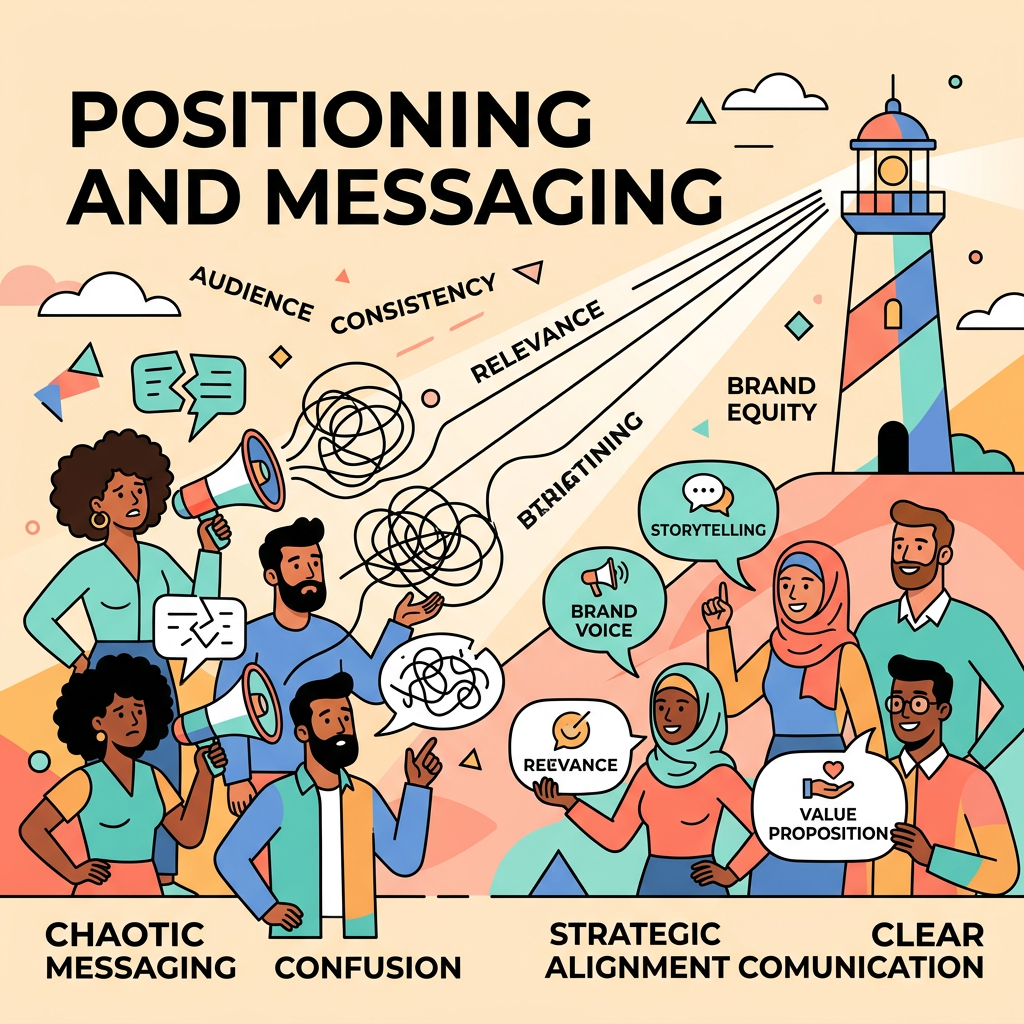
It's one of the most common calls in B2B marketing: the website isn't converting, so the team hires a copywriter to rewrite it. The deck isn't landing, so they rebuild it with better design. The emails aren't opening, so they A/B test subject lines.
These are surface-level interventions for a structural problem. If your messaging isn't working, it almost never means the words are wrong. It means the positioning underneath them is unclear, differentiated, or hasn't been validated against real buyer behavior.
Positioning and messaging are not the same thing — and confusing them is one of the most expensive mistakes a GTM team can make.
Positioning: The Strategic Decision
Positioning is the choice you make about how your product is perceived relative to alternatives — in the mind of a specific buyer, in a specific context.
It answers three core questions:
- For whom? The specific buyer you're positioning for — not the market at large.
- Against what? The frame of reference: what they're comparing you to, including the status quo.
- Why you? The differentiated value you deliver that alternatives cannot match in the same way.
Positioning is internal and strategic. It's a deliberate choice made by leadership, validated by data, and locked in before messaging begins. It doesn't change every quarter. It evolves as the market evolves — but it should never be ad hoc.
A great positioning statement might never appear verbatim in any customer-facing material. Its job is to be the north star that every piece of messaging is derived from.
Messaging: The Communication Layer
Messaging is how you translate your positioning into language that resonates with specific audiences across specific channels and moments.
Strong messaging is:
- Audience-specific: The VP of Sales needs to hear something different than the CFO or the end user.
- Context-sensitive: Cold outreach messaging differs from late-stage sales content.
- Channel-appropriate: LinkedIn ad copy differs from a pitch deck narrative or a website hero.
- Consistently derived: Every variation should trace back to the same core positioning — even if it sounds different on the surface.
Messaging lives in execution. It's what your buyers actually read, hear, and respond to. But it should never be the place where strategic decisions are made.
The Sequence That Gets Violated
The correct sequence is: market definition → ICP → positioning → messaging → campaigns. Each step produces the input for the next. See how this maps to the full 5 phases of GTM.
What most teams actually do: write copy, then reverse-engineer positioning to justify it. Or run campaigns, then ask "why isn't this converting?" — without realizing the answer is three steps upstream.
This inversion is expensive and common. It means messaging gets built on intuition rather than strategy. It means every campaign iteration changes the words but not the underlying problem. It means writers are expected to solve a strategic failure with a tactical fix.
How to Know If Your Positioning Is the Problem
The signs are consistent across companies:
- Different people in your company describe the product differently when asked what it does
- Prospects frequently say "I still don't understand what makes you different"
- You win on price or relationships — not on the strength of your value proposition
- Your competitive win rate is inconsistent — strong in some situations, weak in others with no clear pattern
- Marketing and sales use different language to describe the same product
Any one of these signals a positioning problem. Multiple together signal a positioning crisis.
Fixing It: Start Upstream
The fix starts with positioning — not messaging. Before you rewrite a single word of copy, answer these questions with specificity:
- Who exactly is this for? (Reference your ICP and personas)
- What category does your product live in — or create?
- What are the realistic alternatives, including "do nothing"?
- What's uniquely true about how you deliver value that alternatives cannot replicate?
- What does success look like for your buyer — and how do you get them there faster?
Lock those answers down across your leadership team. Then build messaging that translates that positioning into language your specific buyers use in the wild — not the language you use internally.
The result is messaging that doesn't just sound better — it converts better. Because the words are no longer the point. The underlying truth they're communicating is.
Build positioning that holds — and messaging that converts.
VergenticAI connects your positioning framework directly to your messaging architecture — so your words are always grounded in strategy.
Start Free TrialTry VergenticAI and build your GTM foundation in days—not weeks.
Start with a 7-day trial to explore the full platform. If it's not a fit, cancel anytime. If it is, you'll have a GTM system you can build on—without losing alignment.
7-day free trial · No credit card required · Cancel anytime