
GTM Alignment: Why Sales and Marketing Miss Each Other — And How to Fix It
The sales-marketing misalignment problem isn't about personalities. It's about a broken system with no shared source of truth.
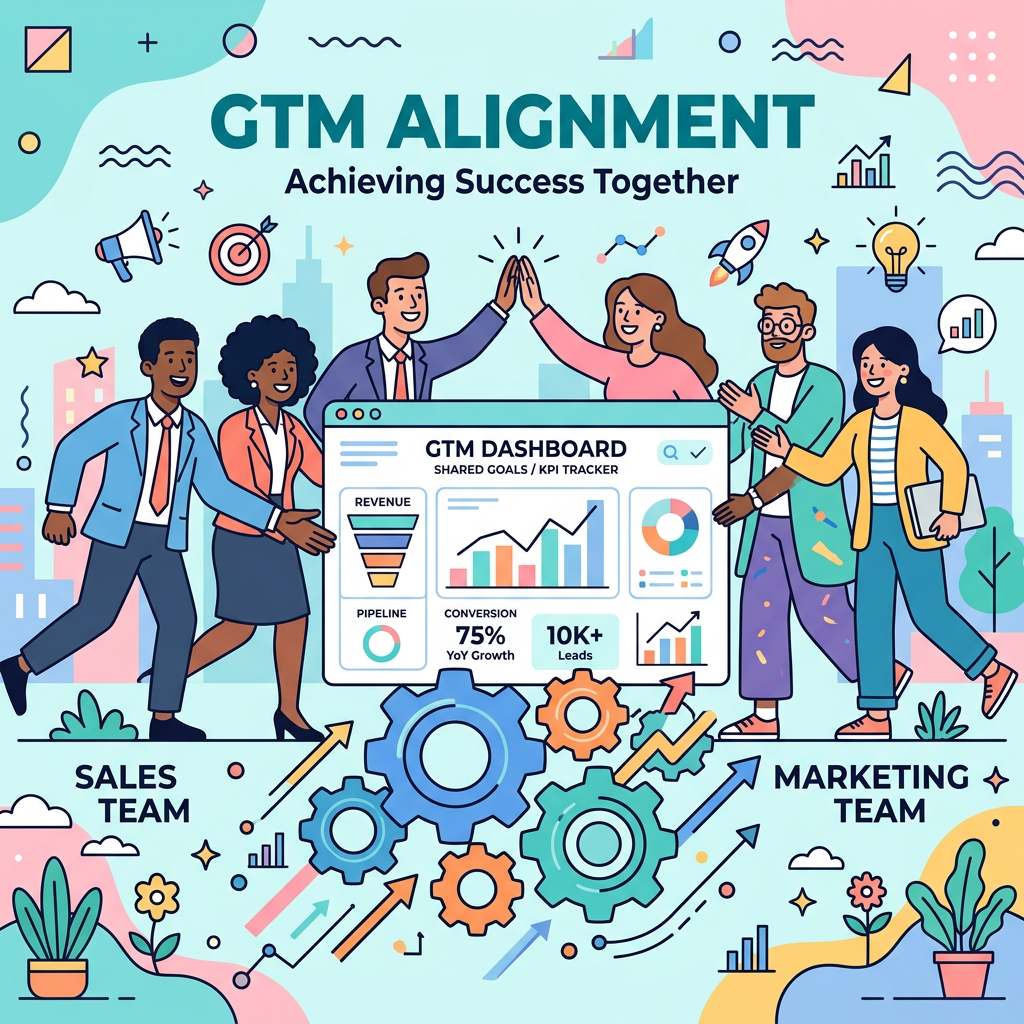
The tension between sales and marketing is one of the oldest dynamics in B2B. Sales says marketing sends bad leads. Marketing says sales doesn't follow up or use the content they produce. Both are usually right — and both are usually looking for the wrong solution.
The problem isn't the people. It's the system — or more accurately, the absence of one. When sales and marketing operate without a shared GTM foundation, every interaction between them is a negotiation. And negotiation at that level is expensive.
The Real Cost of Misalignment
GTM misalignment is one of the most studied problems in B2B — and one of the least effectively solved. The symptoms are familiar:
- Marketing qualified leads (MQLs) that sales won't work
- Sales using decks, one-pagers, and email templates they built themselves because the "official" materials don't match what buyers actually ask
- Campaigns built around messaging that doesn't match the real sales conversation
- Late-stage deals lost for reasons that could have been addressed in positioning and content
- Pipeline reviews that devolve into blame conversations instead of strategic discussions
Each of these symptoms has the same cause: there's no single version of the strategy that both teams are operating from. Marketing built their version. Sales built theirs. And at the seam between them — where leads become pipeline and pipeline becomes revenue — the gap shows.
Why "Better Communication" Doesn't Work
The instinctive response to sales-marketing misalignment is to add meetings. More syncs, more shared Slack channels, more SLA definitions. This helps at the margins, but it doesn't fix the structural problem.
You can't align two teams through communication alone when they're operating from fundamentally different versions of the strategy. Better communication makes the misalignment more visible — it doesn't make it go away.
Alignment is achieved through shared structure: a single, validated, accessible GTM strategy that both teams can point to when decisions need to be made. One ICP definition. One positioning framework. One set of core messages. One competitive narrative.
What a Shared GTM Foundation Looks Like
A functional GTM alignment system has a few non-negotiable elements:
A single ICP definition that both teams use to evaluate leads, prioritize accounts, and measure campaign performance. Not "enterprise companies" — a specific profile with firmographic and behavioral criteria that both teams understand and agree on.
A validated positioning framework that explains the competitive frame, the differentiated value, and the specific buyer problems the product addresses. When sales gets a competitor question they haven't heard before, the answer should come from the positioning — not improvisation. (More in our article on Positioning vs. Messaging.)
A messaging architecture that maps core messages to specific personas and buying stages. Sales shouldn't be rewriting the website — they should have stage-appropriate content derived from the same strategic source that marketing is using.
A shared definition of a good lead — built together, not handed down. When sales and marketing co-create the ICP and lead criteria, the "bad leads" problem largely solves itself because the targeting was set collaboratively from the start.
A feedback loop from sales back to strategy. Sales reps are the closest thing you have to a real-time market intelligence system. What objections are they hearing? What competitors are coming up? What features are buyers asking for that you don't have? This information needs a formal path back into the GTM strategy — not just informal hallway conversations.
The Alignment Flywheel
When sales and marketing operate from a shared foundation, something interesting happens: each team makes the other more effective. Marketing's campaigns bring in leads that match what sales is actually trying to close. Sales' field intelligence sharpens marketing's targeting and messaging. The friction decreases. The handoffs get cleaner. Pipeline velocity increases.
This is the alignment flywheel — and it only starts turning when both teams are working from the same source of truth.
Building that source of truth is the work. The meeting cadence, the shared dashboards, the SLA agreements — those are how you maintain alignment once you've established it. But you can't maintain something you haven't built.
Where to Start
If your sales and marketing teams are misaligned today, the fix starts with the GTM foundation — not the org chart or the meeting structure. Get both teams in a room (or a document) and answer the foundational questions together:
- Who is our ICP, specifically?
- What does a good lead look like — from both sides of the table?
- What are the two or three things we consistently win on when we win?
- What do we hear in deals that our content and campaigns aren't addressing?
The answers to those questions are the beginning of a shared GTM strategy. From there, you can build the structure that keeps both teams rowing in the same direction — without a meeting to coordinate every stroke.
Give your whole team one GTM source of truth.
VergenticAI gives sales and marketing a shared platform for strategy, messaging, and intelligence — so everyone operates from the same playbook.
Start Free TrialTry VergenticAI and build your GTM foundation in days—not weeks.
Start with a 7-day trial to explore the full platform. If it's not a fit, cancel anytime. If it is, you'll have a GTM system you can build on—without losing alignment.
7-day free trial · No credit card required · Cancel anytime